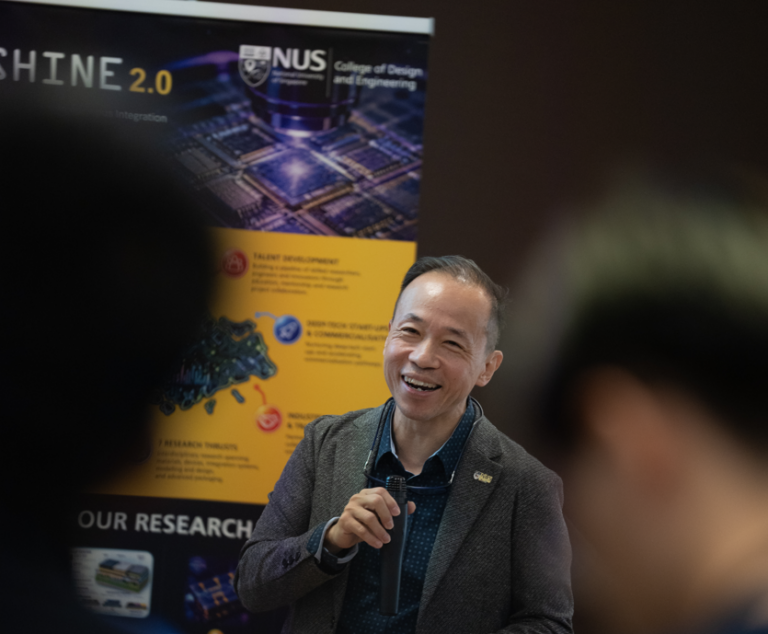
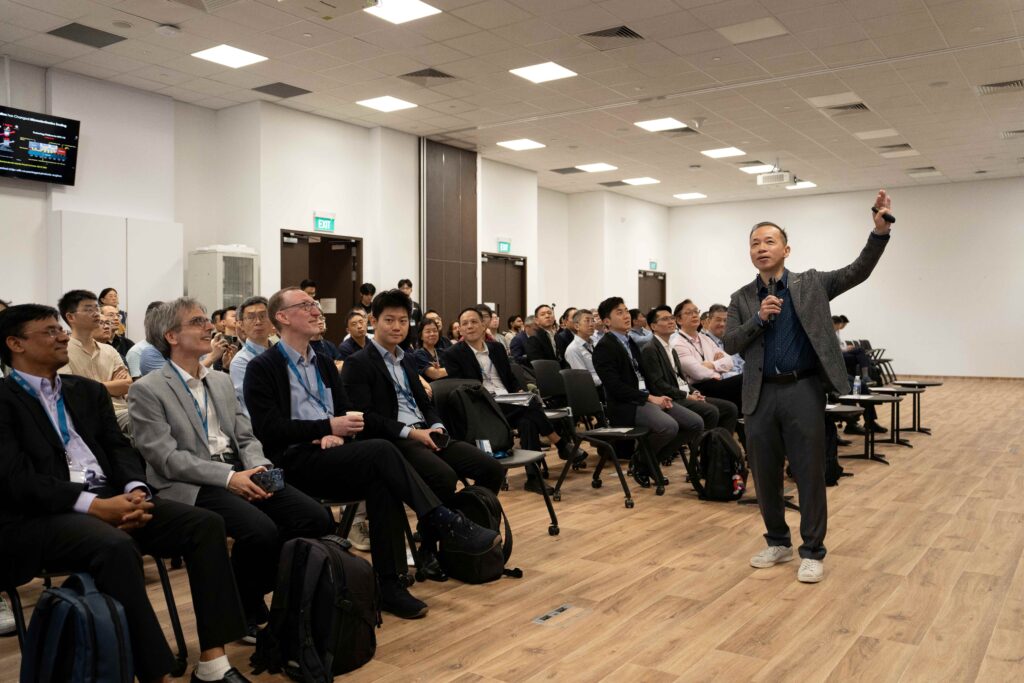
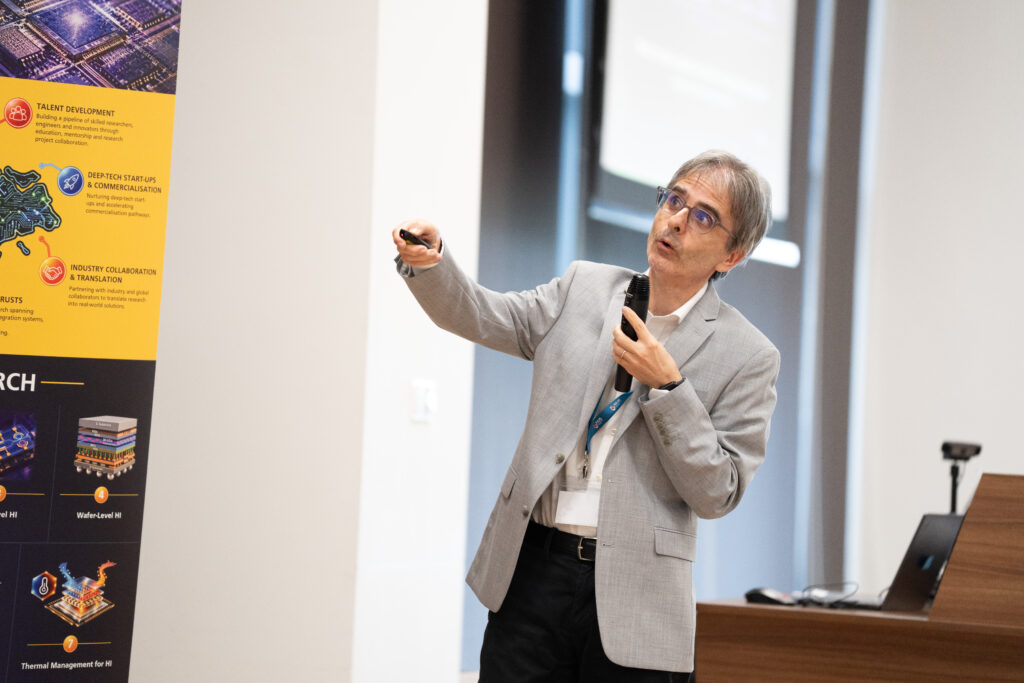
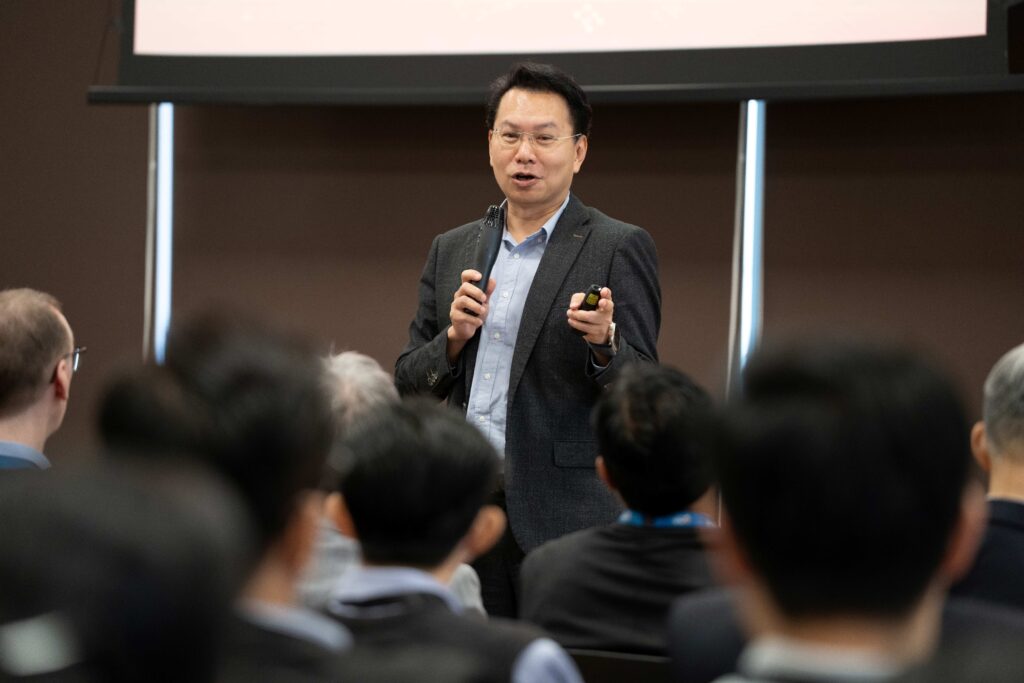
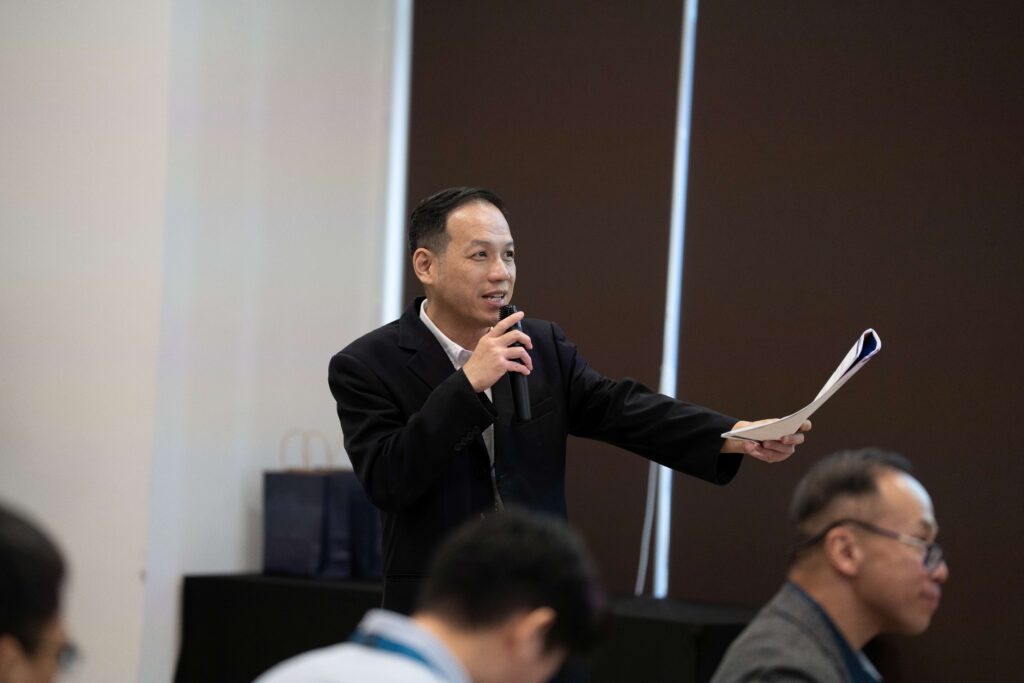
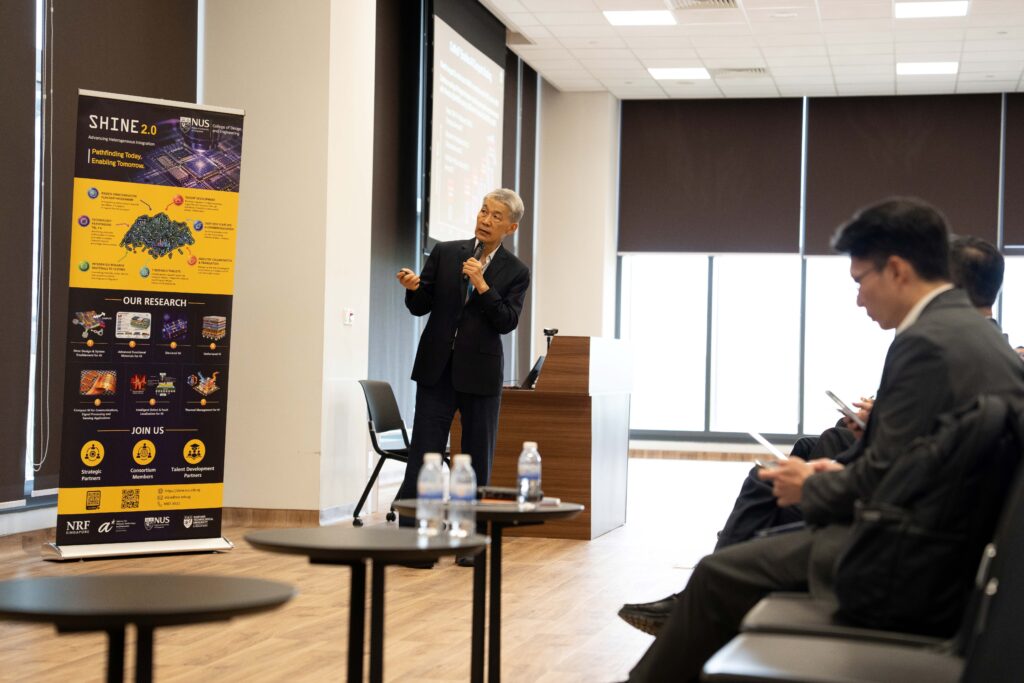
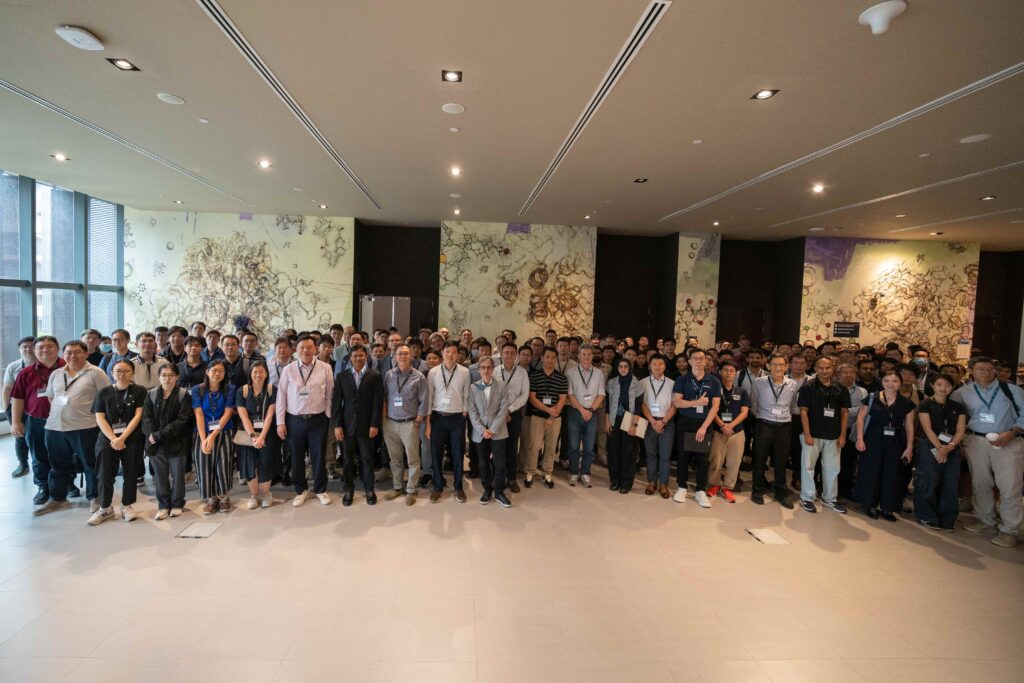
Marking the eighth workshop since SHINE’s establishment and the first under SHINE 2.0, the event on 22 October 2026 at the National University of Singapore (NUS) brought together researchers, industry leaders and partners to exchange insights on emerging semiconductor technologies and explore new opportunities for collaboration.
The workshop showcased SHINE 2.0’s research directions in heterogeneous integration, advanced packaging and related technologies, strengthening connections across Singapore’s semiconductor research and industry ecosystem. The programme featured leadership appointments, industry and technical presentations, research poster engagement, and a panel discussion on the future of the semiconductor industry.
Opening Address and Leadership Appointments
Prof Aaron Thean, Director of the SHINE Centre and Deputy President (Academic Affairs) and Provost of NUS, delivered the welcome remarks and opening address, introducing SHINE 2.0 and its research programme.
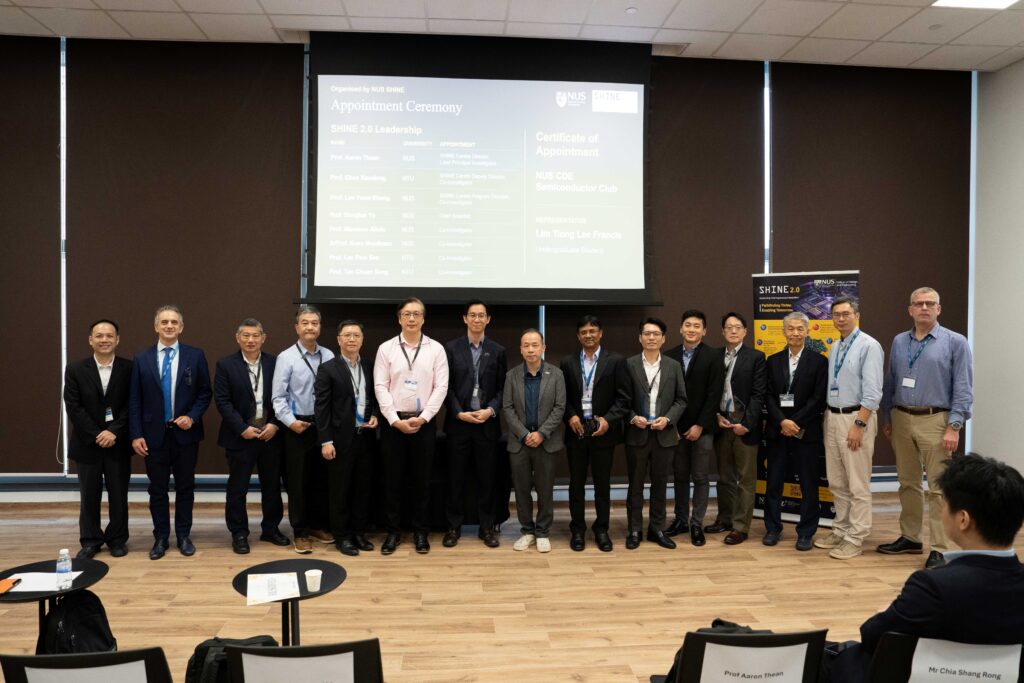
Marking the transition from SHINE 1.0 to its next chapter, the opening session featured a plaque presentation ceremony recognising SHINE 1.0 Governance Board members, Scientific and Technology Advisory Committee members, and industry partners for their valued contributions. This was followed by the official appointment of the SHINE 2.0 leadership team, comprising Prof Aaron Thean as Centre Director and Lead Principal Investigator; Prof Chen Xiaodong as Deputy Director and Co-Investigator; Prof Lim Yeow Kheng as Programme Director and Co-Investigator; Prof Douglas Yu as Chief Scientist; and Prof Massimo Alioto, Prof Koenraad Mouthaan, Prof Lee Poo See and Prof Tan Chuan Seng as Co-Investigators.
The session also marked the official appointment of the NUS College of Design and Engineering (CDE) Semiconductor Club in support of SHINE’s programme and outreach activities. Undergraduate student Lim Tiong Lee Francis received the Certificate of Appointment on behalf of the club, signifying its commitment to supporting SHINE’s initiatives and engaging the wider student community.
Industry Perspectives on Semiconductor Innovation
The morning seminar examined Singapore’s semiconductor ambitions and the technological developments shaping the industry’s next phase.
Mr Chia Shang Rong, Manager of Semiconductors at the Singapore Economic Development Board (EDB), outlined Singapore’s vision for advanced packaging, emphasising multidisciplinary talent development, stronger public research and development capabilities, and a conducive business environment.
Dr Serge Biesemans, Senior Vice President of imec, presented on advanced logic technology pathfinding, examining the evolution of CMOS transistor architectures and research directions beyond complementary field-effect transistors (CFETs).
Mr Fabio Pellizzer, Fellow at Micron, discussed non-volatile memory technology pathfinding and the growing importance of semiconductor memory in artificial intelligence (AI) systems. His presentation covered developments in DRAM, 3D NAND, high-bandwidth memory and advanced packaging, alongside challenges in energy efficiency and sustainability.
Dr Ashok Muthukumaran, Senior Director of Advanced Packaging at Applied Materials, explored the transition from traditional Moore’s Law scaling towards system-level scaling. He highlighted heterogeneous integration, fine-pitch hybrid bonding and die-to-wafer integration as approaches to meeting the growing performance demands of AI and high-performance computing.
Prof Yee-Chia Yeo, Deputy Chief Executive of A*STAR (Innovation & Enterprise), presented Singapore’s Semiconductor Research, Innovation and Enterprise (RIE) Flagship, highlighting its ambition to translate frontier research into industry-ready capabilities and align academic research with national semiconductor priorities.
SHINE 2.0 Research and Technical Highlights
The afternoon session showcased research across SHINE 2.0’s thrust areas, addressing challenges in semiconductor integration, functional materials, power delivery, photonics, thermal management and diagnostics.
Prof Douglas Yu, Chief Scientist of the SHINE Centre, opened the technical session with a presentation on emerging frontiers in heterogeneous integration. He examined AI-driven industry trends and the growing importance of system-level integration, thermal solutions, high-bandwidth memory and co-packaged optics.
Prof Massimo Alioto, Thrust 1 Co-Investigator at NUS, addressed power, data and memory bottlenecks in compute-intensive silicon systems. He presented research approaches involving AI-powered power delivery, energy-efficient optical interconnects and in-memory computing.
Prof Chen Xiaodong, Thrust 2 Co-Investigator at NTU, highlighted advances in functional materials for semiconductor packaging, including engineered interfaces, thermal management materials and advanced interconnects. He also discussed the potential of AI-enabled materials discovery to accelerate materials development and optimisation.
Prof Aaron Thean presented research on die-level heterogeneous integration and thermal management, covering the integration of thin-film lithium niobate devices with silicon photonics, as well as thermoelectric cooler arrays and ferrofluid-based cooling approaches for advanced semiconductor systems.
Prof Tan Chuan Seng, Thrust 4 Co-Investigator at NTU, explored AI-driven design for advanced packaging, highlighting machine learning applications in silicon photonics and automated approaches to accelerate device development.
Prof Lim Yeow Kheng, Thrust 4 and Thrust 6 Co-Investigator at NUS, presented research on system-technology co-optimisation for backside power delivery networks and AI-enabled fault localisation. His presentation highlighted the use of multiphysics modelling, advanced sensing and physics-guided AI to improve semiconductor package design, reliability and diagnostics.
Prof Koenraad Mouthaan, Thrust 5 Co-Investigator at NUS, concluded the technical presentations with advances in microelectronics for communication, signal processing and sensing, including radio-frequency system-on-chip technologies and phased-array systems.
Research Posters and Networking
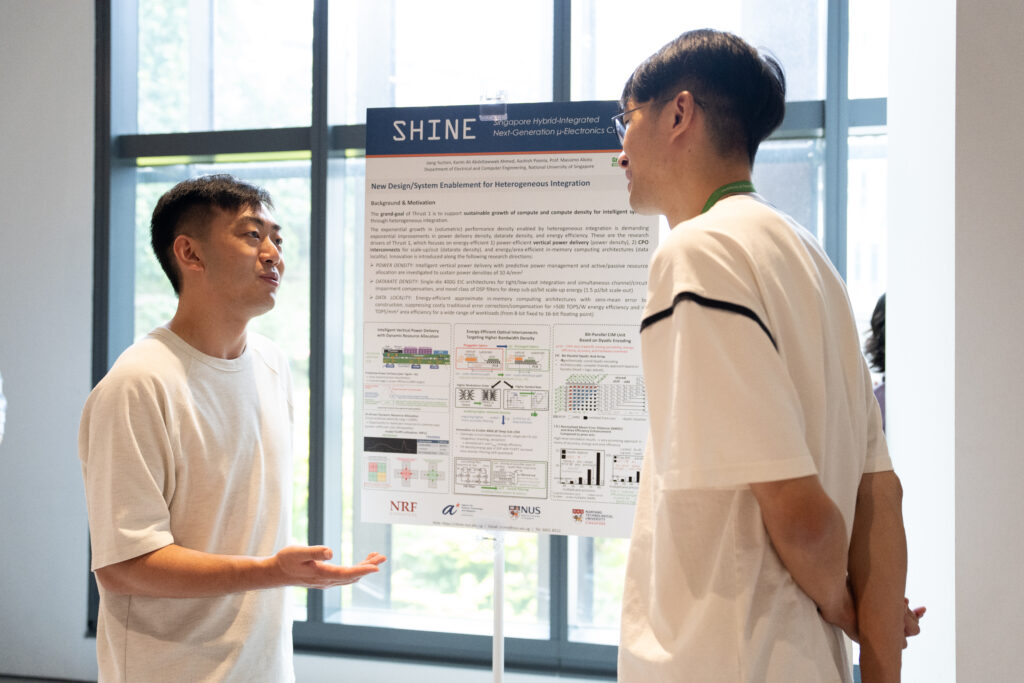
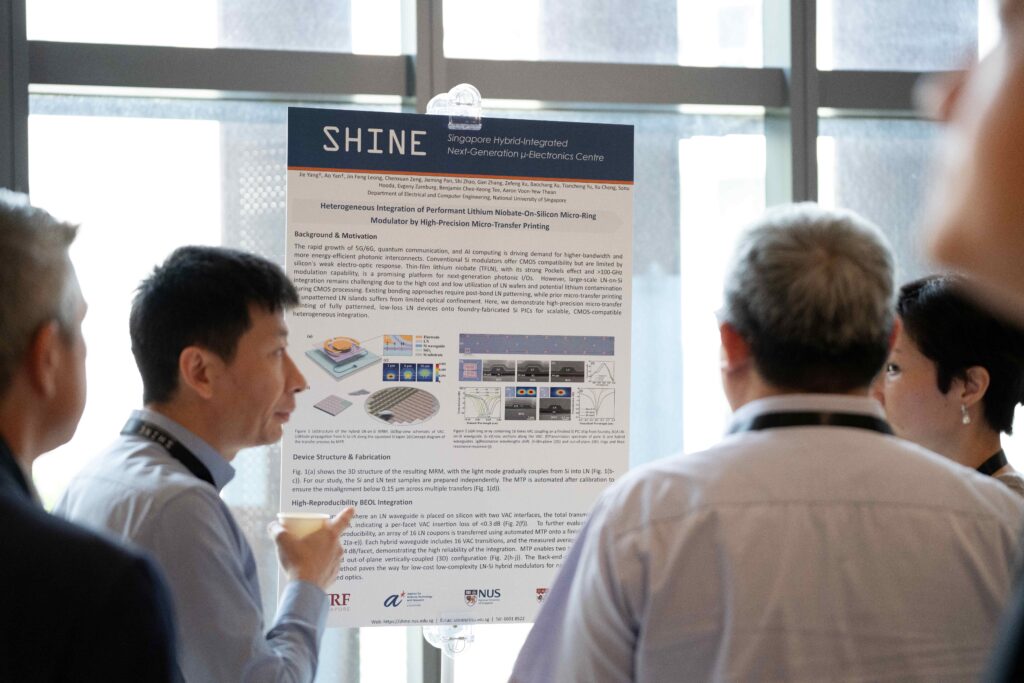
The Thrust poster displays complemented the technical presentations by providing opportunities for participants to engage directly with SHINE researchers. The posters showcased projects across SHINE 2.0’s research areas, enabling researchers to explain their work, exchange ideas and discuss emerging developments and potential applications.
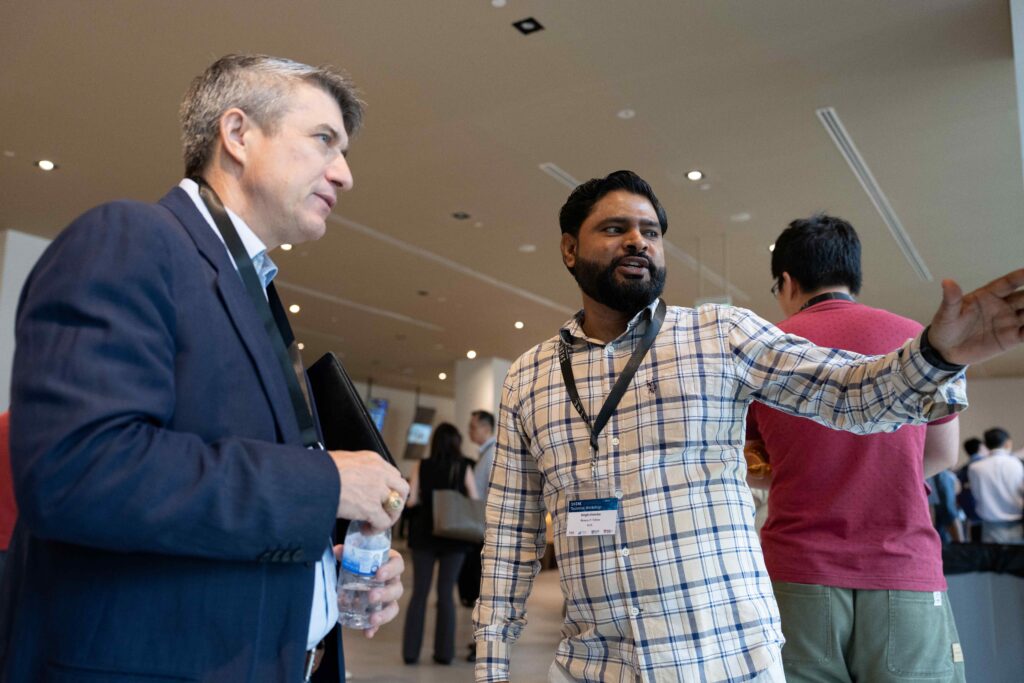
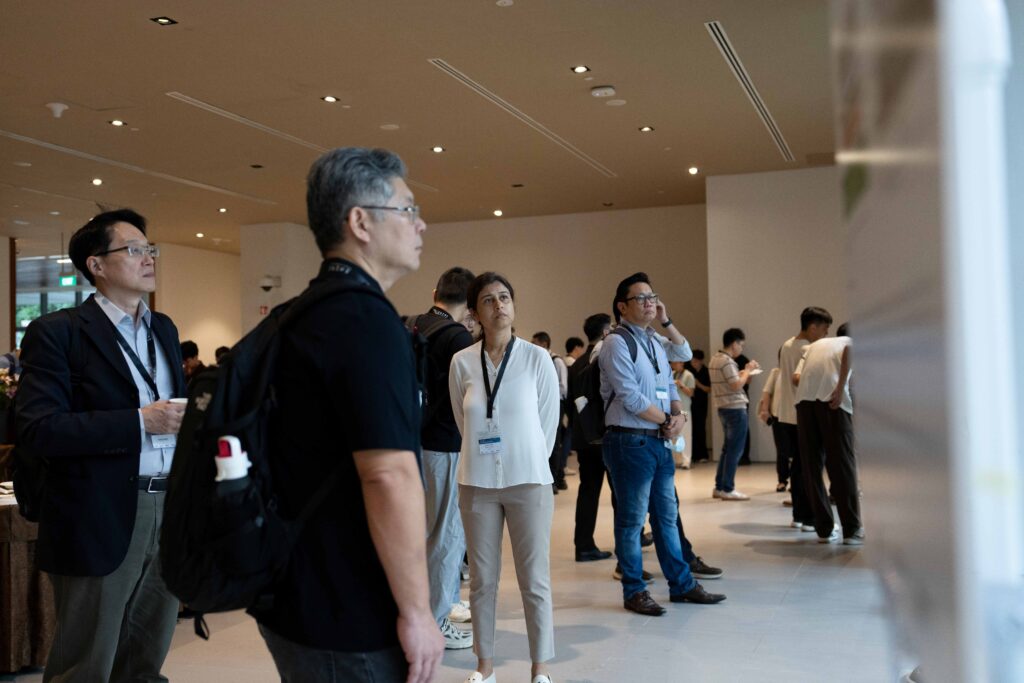
Lunch and refreshment breaks also facilitated networking among researchers, industry representatives and participants. These interactions encouraged the exchange of perspectives, strengthened professional connections and provided opportunities to explore potential collaborations across the semiconductor community.
Panel Discussion: Beyond the AI Boom
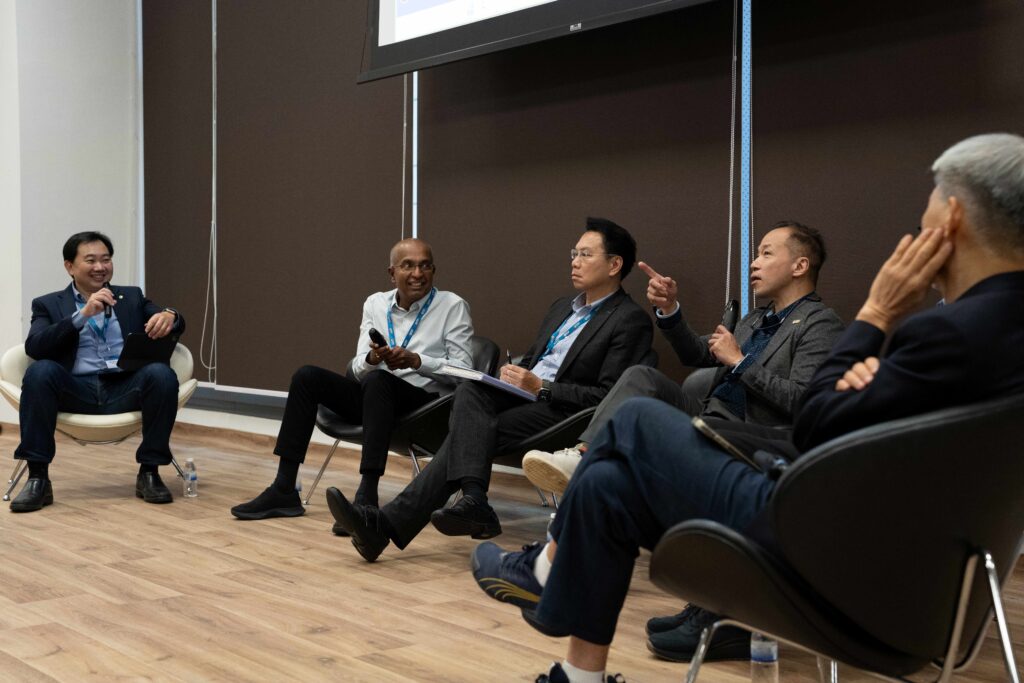
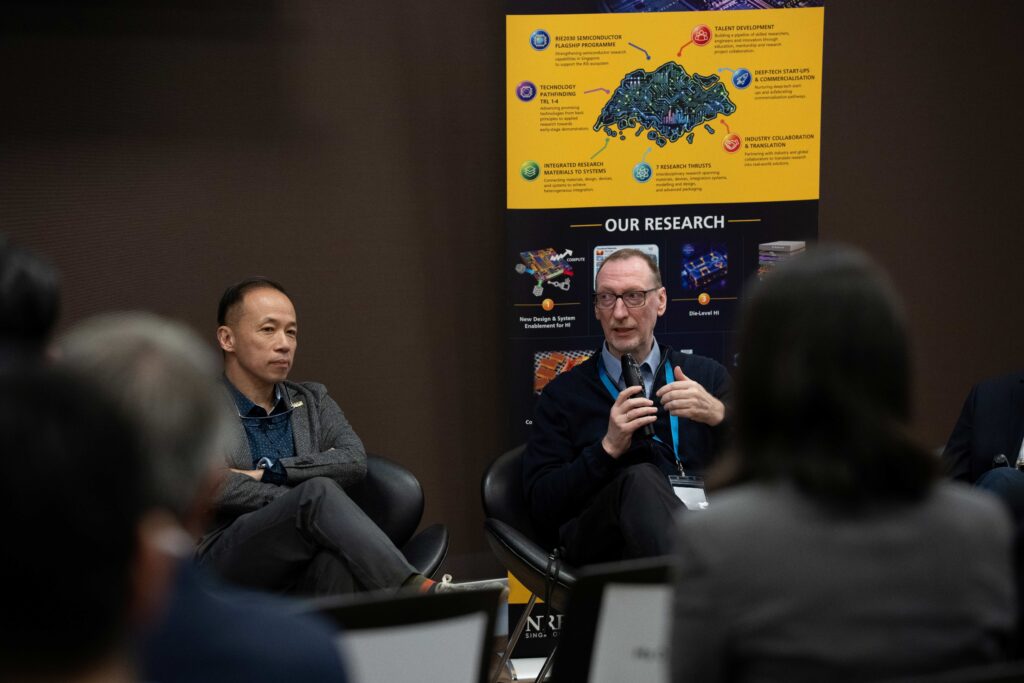
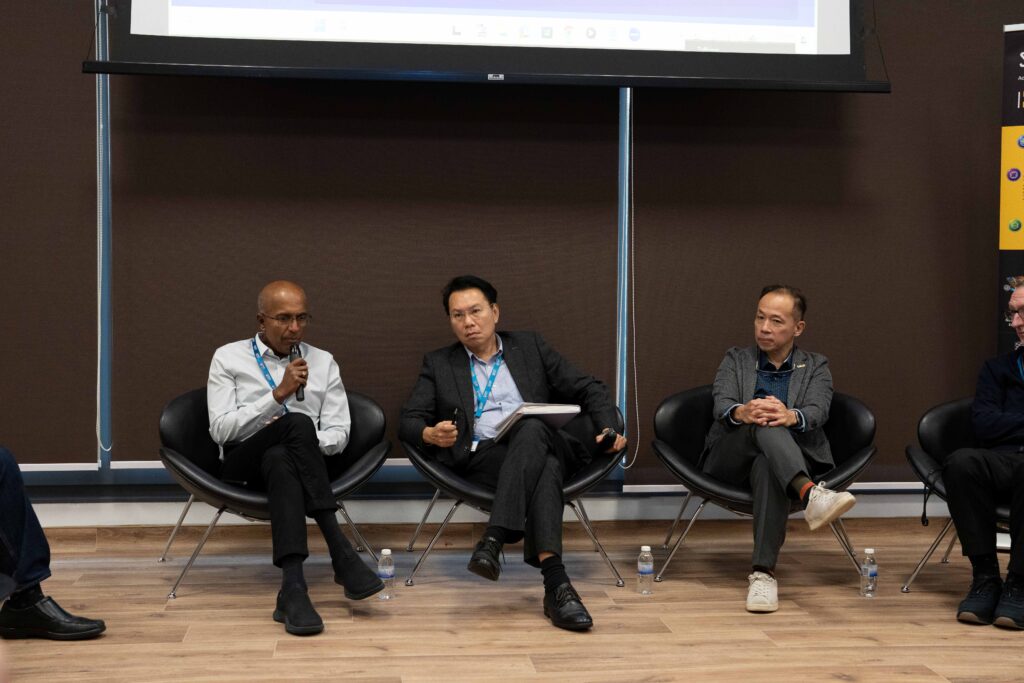
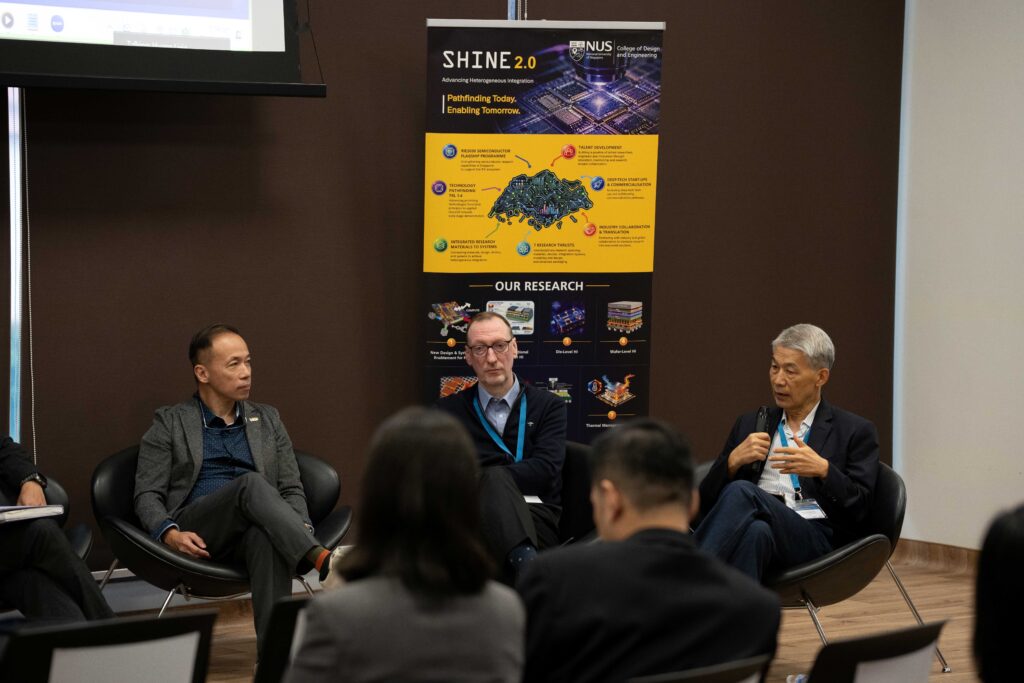
The workshop concluded with a panel discussion titled “Beyond the AI Boom: What Will Define the Next Semiconductor Era? Technology, Partnerships and Talent for Global Leadership.”
Moderated by Mr Ang Wee Seng, Executive Director of the Singapore Semiconductor Industry Association (SSIA), the panel brought together Prof Aaron Thean, Prof Douglas Yu, Prof Yee-Chia Yeo, Dr Serge Biesemans and Prof Radha Nagarajan, Senior Vice President at Marvell.
The panellists examined the technological developments, partnerships and talent capabilities that will shape the semiconductor industry’s next phase, building on the day’s discussions on AI, heterogeneous integration and advanced packaging. Prof Lim Yeow Kheng delivered the closing remarks.
Advancing Semiconductor Research and Collaboration
The SHINE 2.0 Opening Workshop provided a platform for academic and industry partners to exchange knowledge, showcase research and discuss emerging challenges in semiconductor technologies.
Through its research programme and collaborative partnerships, SHINE 2.0 continues to contribute to Singapore’s semiconductor research and development ecosystem, advancing heterogeneous integration and related technologies for future electronic and photonic systems.