


In support of Singapore’s effort to strengthen the semiconductor talent pipeline, SHINE is proud to collaborate with the NUS Department of Electrical and Computer Engineering, the Department of Material Science and Engineering (MSE), and the Department of Industrial Systems Engineering and Management (ISEM) to offer The Master of Science in Semiconductor Technology and Operations (MSc STO).
Launched in August 2024, the MSc STO programme provides comprehensive training in key areas of semiconductor technology, manufacturing, and operations. Through its interdisciplinary curriculum, students develop a holistic understanding of the technical, operational, and business challenges facing the semiconductor industry. The programme fosters critical thinking, systems-level problem-solving, and an appreciation of diverse perspectives, preparing graduates to thrive in a rapidly evolving global semiconductor ecosystem.
The programme also offers selected industry-linked pathways that address emerging workforce needs. Eligible students under the industry scholarship programme may pursue an Applied AI for Materials and Process Engineering specialisation, which combines advanced academic coursework with industry-based experiential learning opportunities. This pathway enables students to develop both deep technical expertise and practical industry experience. For specific information, click here.
Beyond technical excellence, the MSc STO programme emphasises responsible engineering practice and sustainability. Students are encouraged to consider the broader environmental and societal impacts of industrial activities and to contribute meaningfully towards sustainable technological advancement.
Optional project and internship components provide valuable experiential learning opportunities through participation in cutting-edge research and development projects or professional placements within Singapore-based organisations.

What set NUS MSc STO apart?
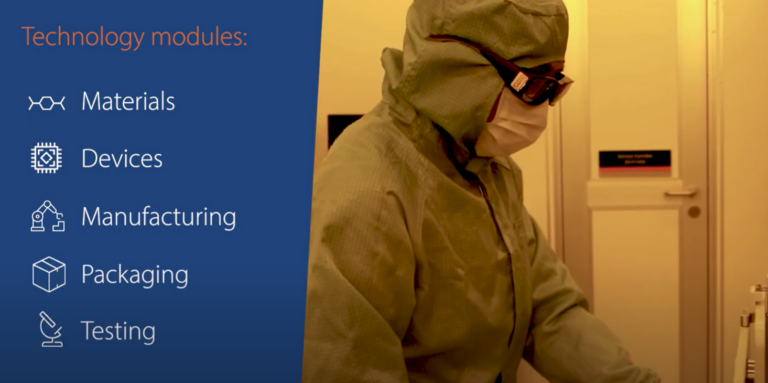
Singapore’s pioneering multidisciplinary Master’s programme spanning the complete semiconductor value chain—from technology and advanced packaging to manufacturing, operations and industry innovation.
Who is it for?
Bachelor’s degree holders (preferably with honours) with relevant engineering and STEM disciplines and wish to continue their education at the graduate level on a full-time basis; as well as for the working professionals on a part-time basis
What are the opportunities?
Graduates are well-positioned for engineering, technical, and management roles across the semiconductor value chain, including:
- Process Engineering
- Process Integration
- New Product Introduction (NPI)
- Manufacturing and Operations
- Yield Engineering
- Test Engineering
- Failure Analysis
- Quality and Reliability Engineering
- Industrial Engineering
- Supply Chain Management
- Customer Support Engineering
- Programme Management
Career opportunities span semiconductor design services, foundries, outsourced semiconductor assembly and test (OSAT) companies, equipment and materials suppliers, AI-enabled materials and process engineering, research institutes, and government agencies.
More about the Graduate Coursework Programme
The multi-disciplinary MSc STO graduate coursework programme is hosted by Department of Electrical and Computer Engineering of NUS College of Design and Engineering.
To find out more about the course curriculum, visit NUS ECE MSc STO site here.
Footnote:
Applied AI for Materials and Process Engineering Specialisation
The Applied AI for Materials and Process Engineering specialisation aims to develop engineering professionals with expertise at the intersection of semiconductor technology, advanced materials, and artificial intelligence. The curriculum integrates semiconductor manufacturing and operations with emerging AI methodologies, enabling students to address complex industrial challenges through data-driven and computational approaches. Areas of application include process optimisation, predictive analytics, yield improvement, and intelligent manufacturing systems. Through a combination of advanced coursework and applied project work, students will develop the interdisciplinary skills required to drive innovation in AI-enabled semiconductor manufacturing, materials engineering, and intelligent industrial systems.
Note: Admission to this specialisation is by selection and requires a relevant compulsory project or internship as part of the specialisation requirements.
- Home
- MASTER OF SCIENCE
Singapore Hybrid-Integrated Next-Generation μ-Electronics (SHINE) Centre
- Block E6, #E6-5-3, 5 Engineering Drive 1, Singapore 117608
- +65 6601 8522
- shine@nus.edu.sg